

Beginner & Intermediate Boxing Classes
Boxing for Teens & Adults: Ages 14+
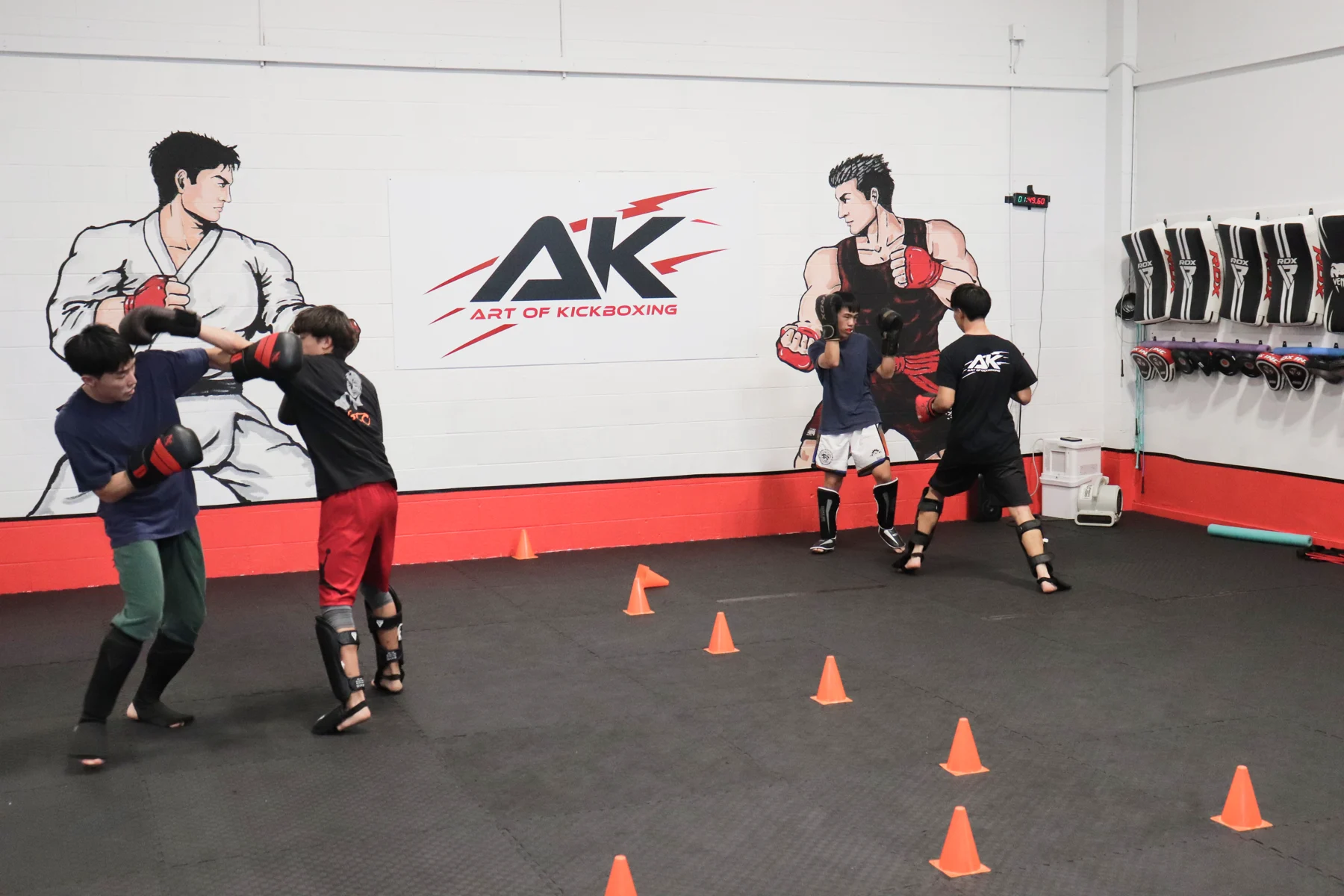
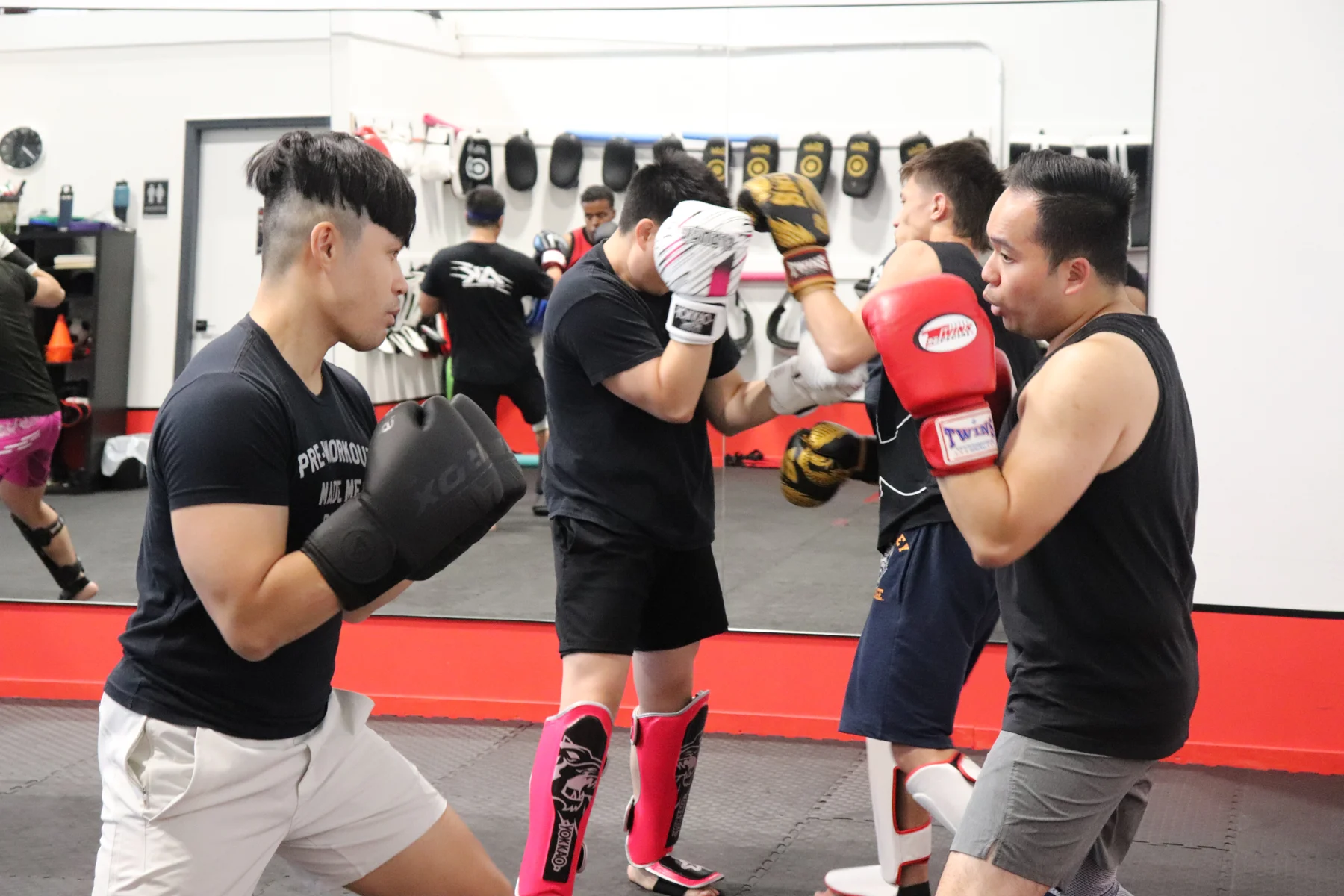
In our boxing classes, students will learn the boxing stance, boxing footwork, defensive movements, how to throw proper boxing crosses, hooks, and uppercuts, unique boxing combinations and techniques, as well as further refine their expertise in the sweet science of boxing.
Additionally, we have beginner-friendly advanced boxing mechanics and defense classes for those who want to further build their boxing skills to an elite level.
class structure
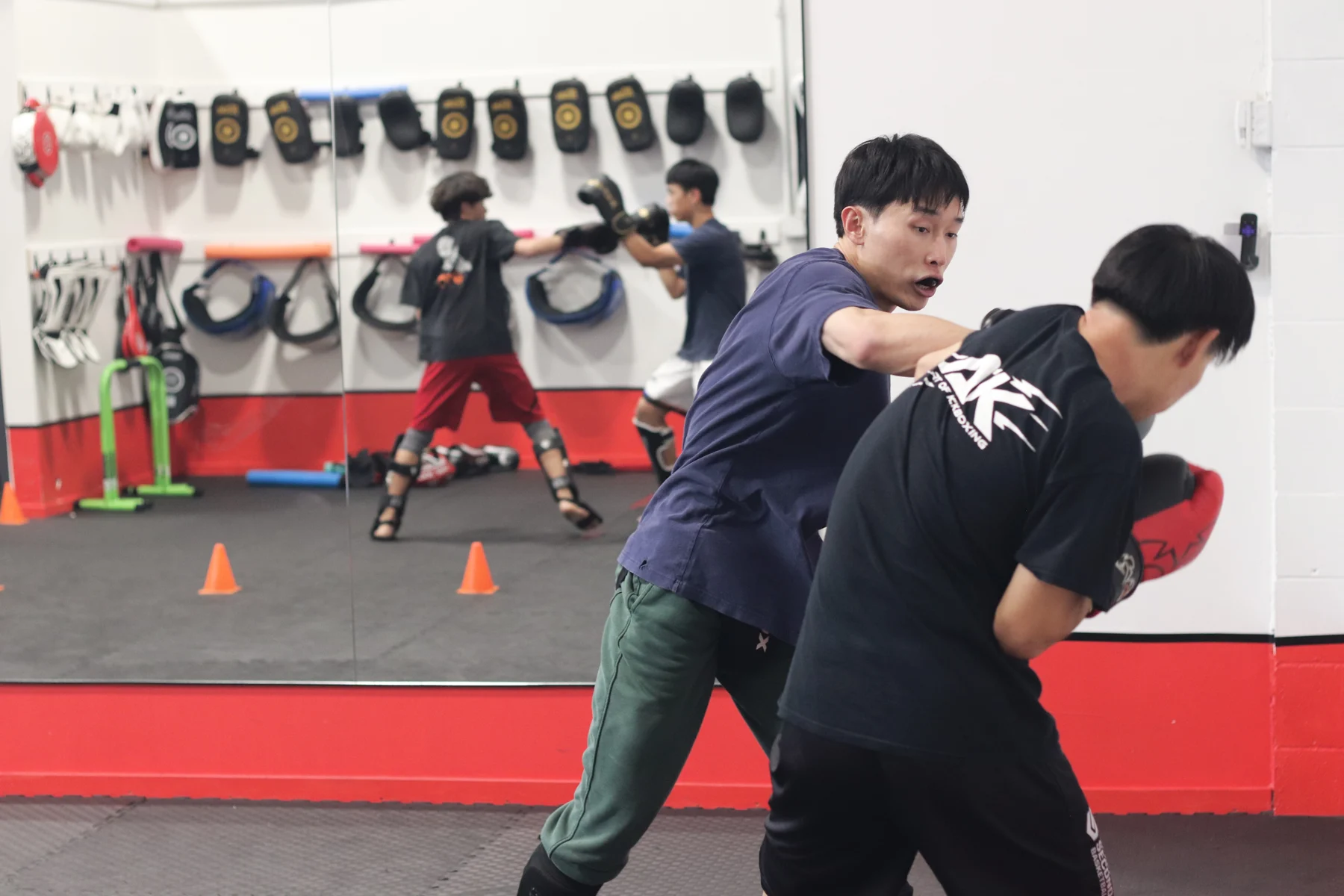
Our boxing classes are focused on learning the boxing stance, boxing footwork, and boxing specific fundamentals including close-quarters rolling and slipping, utilizing angles through bobbing and weaving for unique boxing combinations such as setting up the liver shot, emphasizing parries and tight defence, and improving timing, coordination, and technique for your punches.
Warm-Up
Footwork Drills: Footwork is the heart of martial arts and combat sports. Warm up through mobility exercises including lateral shuffles and pivot exercises. Calisthenics: Warm up your entire body with jumping jacks, squats, and MMA drills to prep for kicks and strikes. Shadow Boxing: Learn proper shadow boxing to build muscle memory for fluid combinations, blending punches and kicks in seamless motion.
Technique & Pad Work
Boxing Fundamentals: Learn the basics of the boxing stance, boxing movement, and punching mechanics. Punches (jabs, crosses, hooks), defence, head movement and combining bobbing and weaving, rolls and slips. Partnered Pad Work: Apply combinations with feedback from experienced trainers – no prior skill level required! Skill Technique Progression: From basic punches to advanced combos, our boxing program adapts into more advanced techniques overtime.
Conditioning and stretching
High-Intensity Drills: Boxing specific drills or circuits for metabolic conditioning to develop the cardiovascular stamina of a boxer. Full-Body Recovery: Static stretches to boost flexibility and reduce soreness.
what to bring
clothing
Breathable, flexible, comfortable workout attire (think shorts, sweatpants, athletic tees, or tank tops).
Footwear
Students can train barefoot, with socks, or with clean indoor martial arts shoes.
Gear
We provide gloves and shinguards to borrow, but students are required to purchase their own gear after borrowing the equipment 3 or more times.
Water
Bring a water bottle to each class. A water fountain is not currently available at the gym; however, we have bottled water and drinks at the gym to purchase.
benefits:
Personal Development - Confidence, Self-Esteem, Discipline
Staying active - Self-Defense, Coordination, Strength, Fitness
life skills - Resilience, Focus, Respect, Situational Awareness
Social skills - Teamwork, Communication, Humbleness
Welcoming community - Friendly, Inclusive, Meeting new people
goal achieving - Belt progression, Technique Building, Competition
Frequently Asked Questions (FAQs)
whY Train In Boxing, if You Train in Kickboxing?
Boxing and kickboxing differ significantly in stance, strategy, and range. Boxing is a completely different martial art that is utilized in kickboxing. Training in boxing sharpens your punching to an elite level and teaches advanced movement and defensive skills that kickboxing often doesn't emphasize, such as weaving and rolling.
Is boxing a Good Cardio Workout?
Like with kickboxing, boxing training is an extremely good workout for your cardiovascular system. Boxing is a lot more tiring to actually do in real life than it looks on TV or online. Drilling out proper boxing combinations for an hour with a professional coach or a good partner can be significantly more calorie burning than jogging for an hour.
Is There Sparring in the Class?
No. There is no sparring in our boxing classes for safety reasons. Students who want to try light sparring can talk to one of our coaches to see if they're ready to spar. Light sparring would be done in our co-ed kickboxing classes; however, only those who we feel are safe enough to spar will be allowed to spar. We highly prioritize safety, and everyone who participates in sparring should understand the risks involved.